


 Send Inquiry
 Send Inquiry
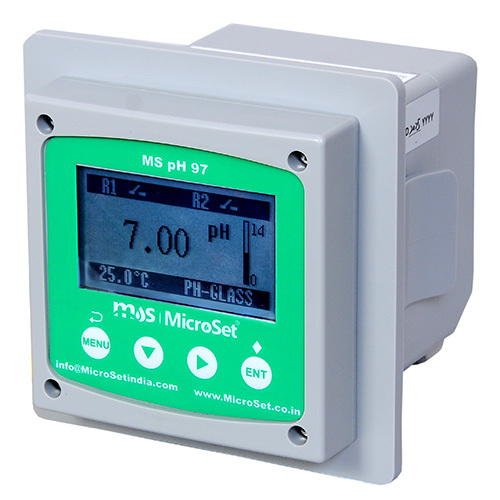
pH ORP Indicating Controller Transmitter-Panel - MS pH 97
pH ORP Indicating Controller Transmitter-Panel - MS pH 97 Specification
- Connection
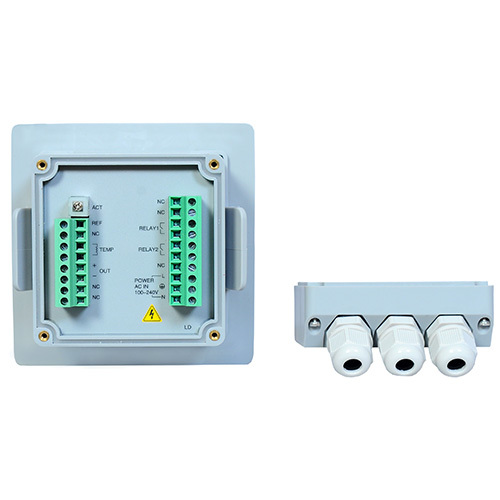
- Terminal block connections for sensor and power supply.
- Pressure
- Atmospheric pressure; panel-mount design does not directly handle process pressure.
- Accuracy
- 0.01 pH, 1 mV (ORP)
- Function
- pH and ORP indicating, controller, and transmitter for process control and monitoring applications.
- Size
- Front panel 96 x 96 mm; Compact design suitable for panel mounting.
- Mounting
- Panel mount, standard DIN size.
- Protection Class
- IP65 (front panel)
- pH Range
- 0 to 14 pH
- Output
- 4-20 mA analogue output, isolated from input; two relay output control points.
- Brand/Model
- MicroSet MS pH 97
- Power Supply
- 85 to 264 V AC, 50/60 Hz universal supply.
- Temperature Compensation
- Automatic with PT-100 sensor input.
- ORP Range
- -1000 to +1000 mV
- Enclosure Material
- ABS/Polycarbonate front panel with seal for dust and moisture resistance.
- Alarm
- Programmable high/low limit alarms for pH and ORP.
- Display
- Large backlit LCD display with real-time pH, ORP, temperature, and relay status indication.
About pH ORP Indicating Controller Transmitter-Panel - MS pH 97
FEATURE
- Advanced Embedded Microcontroller Based Design
- Can be connected to pH or ORP electrodes
- Multivariable Display for Process Value, Relay Status,
- Temperature & 4 to 20 mA output
- Easy Front Key Calibration
- Auto / Manual Temperature Compensation
- Set Point - 4 Nos
- 3.2-inch LCD display
- 4 to 20 mA DC Isolated Output for pH or ORP
- Password can be Set
- Weatherproof IP 66 Protection
DESCRIPTION
MicroSet pH ORP Indicating Controller Transmitter Model MS pH 97 is used for various industrial applications. MS pH 97 is a convenient and cost-effective solution for monitoring and maintaining pH or ORP value. It can accept input from any pH or ORP sensor. MS pH 97 output is in the form of Analogue 4-20 mA DC or MODBUS RS 485 RTU (Optional). Online pH ORP indication provided through LCD display is easily readable. 2 Nos Relay Outputs are provided to operate Alarm, Solenoid Valve, Pump etc. 4 Nos Setpoints for Relays can be programmed using Frontal Keypad.
PRINCIPLE
Why pH Measurement is required?
To check the acidic or alkaline nature of aqueous solution. pH (Potential Hydrogen) is unit of measurement, used to determine the Acidity or Alkalinity of an aqueous solution. Practical pH scale for industrial instrumentation ranges from 0 to 14 pH. The acidic substances range from 0 to 6 and on the other end are the alkaline substances, which range from 8 to 14, with pH 7 being neutral, this is the pH of pure water which is neither very acidic nor very alkaline, is said to be neutral.
How pH is measured?
Although everyone is familiar with Litmus paper, the only reliable way to measure pH is using Potentiometric Combination electrodes. These electrodes develop a millivolts output corresponding to pH value of solution which is directly proportional to the Free Hydrogen ion concentration in an aqueous Solution. These generated raw mill volts are fed to MS pH 97 where it is processed by amplifier & reading is displayed on meter
TECHNICAL SPECIFICATION
- pH Range : 0 - 14 pH
- ORP Range : 2000 mV
- Temperature Range : -10 to 150C
- pH Resolution : 0.01 pH
- ORP Resolution : 1 mV
- Temperature Resolution : 0.1C
- pH Accuracy : 0.1% FS or 0.01pH
- ORP Accuracy : 2 mV
- Stability : 0.05% of measuring range every 24 hours without accumulation pH
- Repeatability : Better than 0.1% of measuring range
- Display : 128*64, 3.2-inch graphic dot matrix LCD
- Set Point : 4 Nos
- Calibration : pH - 3 Point, ORP - 2 Point
- Output : Two SPST relays, Max. load 3A/250VAC, set high/low
- alarm, temp or clean control
- Retransmission Output : Isolated 4-20 mA DC for pH/ORP Max. load 1000 ( RS
- 485 Optional)
- Temperature Compensation : Auto (PT-100), Manual (Adjustable 0 to 150C)
- Power Supply : 100~240V 50/60Hz
- Enclosure MOC : ABS
- Protection : Weatherproof IP 66
- Work Temperature : 060, RH<95%, non-condensin
- Storage Temperature : -2070, RH<55%, non-condensing
- Mounting : Panel Mounted
- Electrical Interface : Reserve three M12*1.5 gland
- Dimensions : 100 x 100 x120mm (Panel Cutout size 92X92mm)
- Weight : 0.45 kg
- Power Consumption : 3W
APPLICATION
- Water Treatment Plant (WTP)
- Wastewater Treatment Plant (WWTP)
- Effluent Treatment Plant (ETP)
- Sewage Treatment Plant (STP)
- RO Water Plant
- Power Plant
- Hydroponics
- Chemical Industry
- Textile Industry
- Paper & Pulp
- Beverages / Food Industry
- Pharma Industry
- Scrubber Application
- Pigment Industry
- Steel Industry
- Aqua Culture
Technical Details 
Versatile Monitoring and Control
This device excels as a complete solution for pH and ORP measurement, process control, and transmitter functions. The controller's dual relay outputs and programmable alarms provide automated safety and process responses, making it ideal for water treatment plants, chemical industries, or laboratory environments.
User-Friendly Operation and Display
The large, legible backlit LCD ensures easy visualization of all vital data, including real-time measurements and system status. The compact DIN standard panel mount ensures straightforward installation and seamless integration into existing control panels.
Robust and Reliable Engineering
Crafted with an ABS/polycarbonate enclosure and IP65-rated front panel, the MS pH 97 offers reliable protection from dust and moisture. Its universal power supply, high accuracy, and isolated outputs guarantee stable performance across a wide range of applications.
FAQ's of pH ORP Indicating Controller Transmitter-Panel - MS pH 97:
Q: How is the MS pH 97 controller installed and connected?
A: The MS pH 97 is designed for panel mounting using the standard 96 x 96 mm DIN cutout. Connection is straightforward via terminal blocks for the sensor and power supply, enabling efficient setup within control panels.Q: What benefits does the automatic temperature compensation provide?
A: Automatic temperature compensation, utilizing a PT-100 sensor input, ensures that pH and ORP readings are accurate, regardless of process temperature fluctuations. This enhances measurement precision in dynamic industrial environments.Q: When should I use programmable alarms with this device?
A: Programmable high and low limit alarms for pH and ORP are ideal for processes where strict threshold monitoring is essential. These alarms provide timely notifications or trigger relays to automate safety or corrective actions.Q: Where is the MS pH 97 most effectively utilized?
A: This controller is optimal for process control and monitoring in water treatment facilities, chemical factories, laboratories, and any industrial environment that requires precise pH and ORP management.Q: What is the process for calibrating the MS pH 97?
A: Calibration involves applying standard buffer solutions for pH or known ORP solutions and following the device's easy-to-use interface instructions, ensuring accurate and reliable measurement across its full operating range.Q: How does the 4-20 mA analogue output benefit process integration?
A: The isolated 4-20 mA analogue output allows reliable transmission of measurement signals to remote monitoring systems or PLCs, ensuring compatibility and electrical safety within diverse automation networks.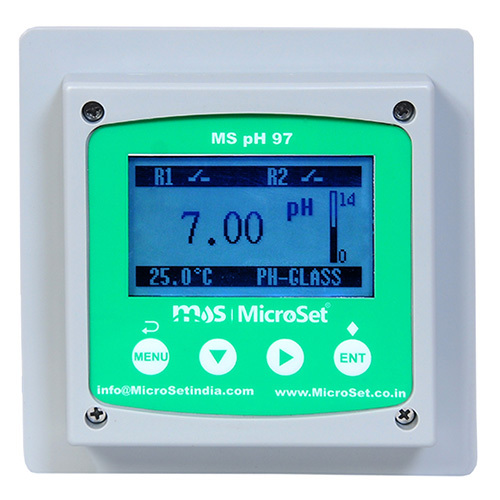

Price:
- 50
- 100
- 200
- 250
- 500
- 1000+

More Products in pH Category
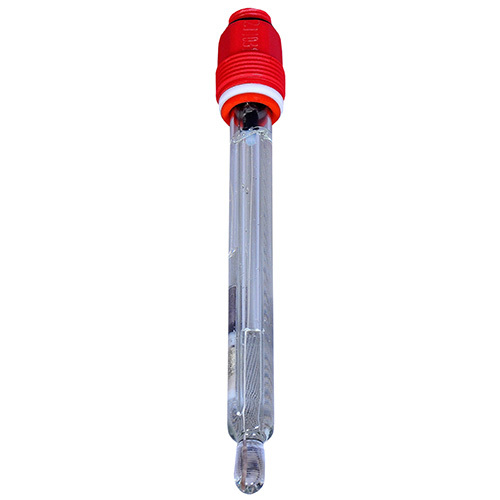
pH Sensor-MS pH 04 Ferm
Price 23999 INR / Piece
Minimum Order Quantity : 1 Piece
Function : Measures pH value in fermentation processes
Pressure : 06 Bar
Size : 120 mm length (standard pH sensor size)
Accuracy : 014 pH
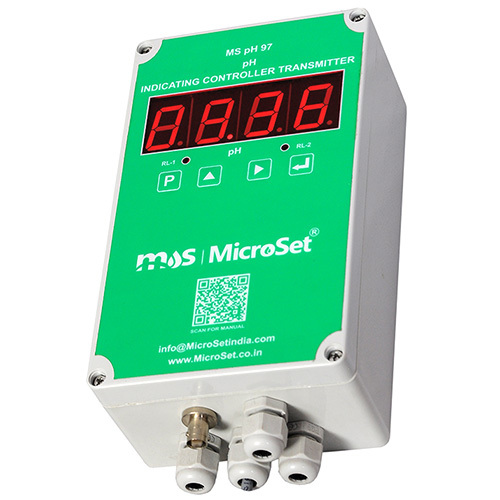
pH Indicating Controller Transmitter Weatherproof-MS pH 97
Price 15899 INR / Piece
Minimum Order Quantity : 1 Piece
Function : pH Indicating, Controlling, and Transmitting
Pressure : Suitable for atmospheric pressure; not intended for highpressure environments
Size : Compact wall mountable enclosure
Accuracy : 0.01 pH
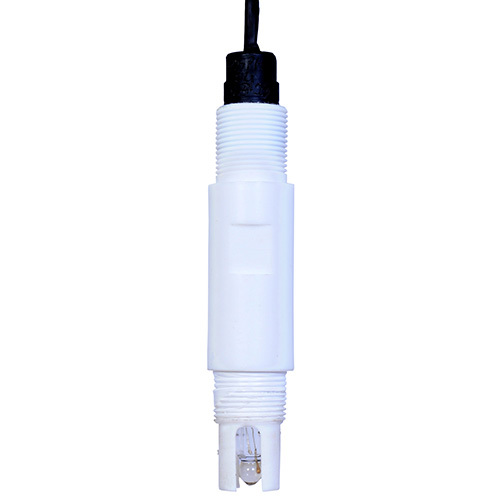
pH Sensor-MS pH 21
Price 26159 INR / Piece
Minimum Order Quantity : 1 Piece
Function : Measures the pH value of liquids
Pressure : Max 6 Bar
Size : Standard industrial size, body length approx. 120 mm
Accuracy : 0.02 pH
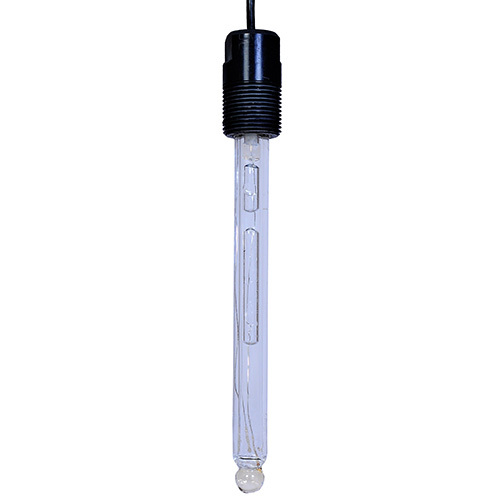
pH Senso-MS pH 03
Price 7259 / Piece
Minimum Order Quantity : 1 Piece
Function : Measurement of pH in liquids
Pressure : 0 to 6 bar
Size : 12 mm diameter, 120 mm length
Accuracy : 0.01 pH

Developed and Managed by Infocom Network Private Limited.

